-
EV Business Solutions
-
EV Drivers
-
Our Company
-
Resources
Public charging includes all charging stations open to the public. You can find them in parking lots, shopping centres, hotels, city streets, and along highways.
Unlike home chargers, public stations operate within charging networks . Each network sets its own pricing rules and may apply additional fees.
Public charging stations play a critical role in electric travel, especially on long-distance trips.
Not all charging stations offer the same experience. The charging level directly affects speed, time, and total cost.
Level 2 chargers are common in urban areas. You often find them near shops, offices, and public parking lots.
In Canada, costs often range from $ 1 CAD to $ 3 CAD per hour. In the United States, prices typically range from $0.20 to $0.40 USD per kWh.
This type of charger works best when you park for a longer period. Charging remains slower but affordable.
Fast chargers are designed to get you back on the road quickly. They use high-power direct current.
With a 100 kW charger, charging speeds increase but still depend on battery performance. Costs often range from 12 to 25$ CAD per session, or from 15 to 30$ USD in the United States.
Price differences often surprise drivers. Several key factors explain these variations.
Higher power chargers cost more to operate.
Fast charging, therefore, costs more than Level 2 even when you receive the same amount of energy.
A 50 kW charger often costs less than a 100 kW charger but delivers slightly slower charging.
Charging networks use different pricing models.
Some networks also add extra fees that drivers may not expect.
Many public charging stations apply an activation fee at the start of a session. This fixed fee usually ranges from 1 to 5 CAD or 1 to 6 USD, depending on the network and country. The network then adds usage fees per minute or per kWh.
These activation fees help cover operating and management costs. They also explain why two charging sessions of similar duration can result in different total prices.
With ChargeHub, you can see these fees before you plug in your electric vehicle.
Charging at strategic public locations, such as highway corridors, often costs more. Demand, maintenance, and real estate all influence pricing.
Without an app, comparing charging costs becomes difficult. A good charging app lets you :
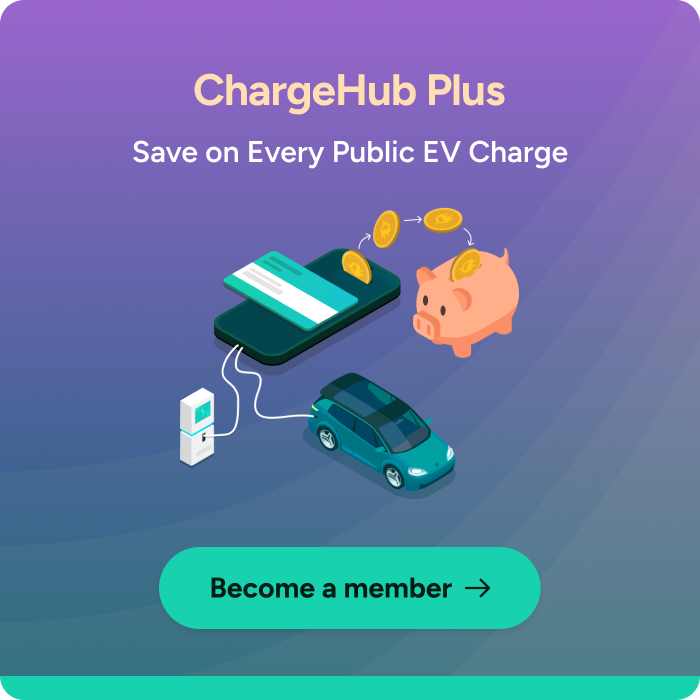
At ChargeHub, we believe transparency makes all the difference. Our subscription simplifies access to public charging.
The subscription allows you to
The ChargeHub Plus subscription removes activation fees on compatible public charging stations.
What this means in practice
Each session starts without unnecessary fixed fees. For frequent drivers, this results in real savings over time.
ChargeHub Plus becomes a smart choice if You regularly use public charging stations You frequently charge at Level 2 stations You take long-distance trips You want to avoid recurring activation fees Even a few charging sessions per month can cover the subscription cost.
Use Level 2 charging when time allows. Save fast charging for strategic stops.
Unplug as soon as you reach the needed charge level to avoid unnecessary fees.
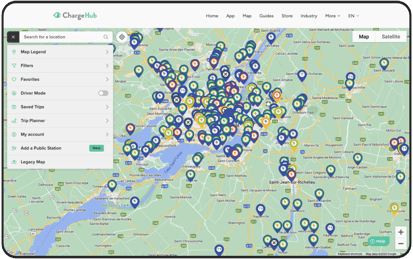
With ChargeHub, you can choose the right station, at the right time, at the right price. Use filters to find chargers compatible with your EV, and check real-time availability on the interactive map before you arrive.
Public charging costs vary based on charger type, charging level, charging speed, and network fees. Understanding these factors helps you anticipate charging costs and plan trips more effectively.
With ChargeHub, we simplify access to charging stations, improve price transparency, and support smarter electric travel planning.
.png?width=400&height=177&name=White%20EV%20Charging%20(1).png)

Public charging costs depend on charger type, charging level, and network. On average, a Level 2 session costs 5-10 CAD, while a fast-charging session costs 12-25 CAD. In the United States, average prices usually range from 9 to 30 USD per session.
Each network sets its own pricing. Price differences depend on:
Two similar public charging sessions can therefore result in different costs.
You can lower charging costs by: