Published on May 29, 2026 (Updated on May 29, 2026)

You've just bought an electric vehicle, or you're considering it. Naturally, the same question keeps coming up: which network should I use to charge my EV? Tesla Supercharger, ChargePoint, Electrify America, FLO, The Electric Circuit, Blink… The list keeps growing, and with it, the confusion.

The key takeaway

  • There is no single "best network" that works for everyone: the answer depends on your route, your vehicle, and how often you charge.

  • Two types of chargers coexist: Level 2 (AC) for everyday use and DC fast charging for long trips.

  • In North America, the public charging network includes hundreds of thousands of ports, including more than 173,000 Level 2 (AC) and nearly 70,000 fast (DC) ports in the United States alone, according to the Alternative Fuels Data Center (AFDC).

  • The winning strategy: use ChargeHub to access multiple networks in real time, without juggling multiple subscriptions.


Why the “Best Network” Depends on Your Situation

Asking "What is the best charging network?" is like asking which gas station is best; it depends entirely on where you are and how quickly you need to get back on the road. Two objective criteria, however, structure any serious comparison: geographic coverage and real-time availability.

Geographic coverage: national networks vs. regional hubs

Not all networks fall into the same geographic category.

Some operators have built a dense national infrastructure, present in California, Quebec, and the Midwest alike. Others have chosen to focus on high-demand areas such as highway corridors or urban centres, where profitability is more assured. The result: a network that is excellent in Los Angeles or Montréal may be virtually absent in rural Canada or the central United States.

The Tesla Supercharger network remains the largest fast-charging network in North America, with more than 35,000 chargers and over 52% market share, though that share is declining, a sign of a maturing market and accelerating competition from other operators. For drivers of non-Tesla EVs, the question of effective coverage becomes central.

In Canada, most charging infrastructure remains concentrated in Ontario and Quebec, which together account for 67% of all ports. British Columbia represents 20%, and Alberta only 5%. If you live outside these areas, the question of the "best network" often comes down to a simple matter of availability.

Real-time availability: the real challenge for EV drivers

The power rating listed on a charger says nothing about whether it's actually available at any given moment. A 150 kW charger with all connectors in use is useless to a driver in a hurry. Experienced drivers know this: the real differentiator is not a charger's maximum speed but its operational reliability and real-time availability.

The rapid expansion phase of charging infrastructure is gradually giving way to a more structured approach focused on reliability, grid integration, and profitability. This market evolution confirms that port count alone is no longer enough; it's the actual experience at the moment of charging that determines driver satisfaction.

Comparing charging networks based on your needs

Before comparing brands, it's important to understand the two main charging technologies. These are what truly define your day-to-day experience.

Fast charging (Level 3 / DC): for highway trips

DC fast charging is designed for drivers on long-distance trips along highway corridors across Canada and the United States. DC fast chargers can charge an EV to 80% in as little as 20 minutes, making them essential for long journeys.

But watch out for a common misconception: a charger rated at 350 kW will not necessarily charge your vehicle at 350 kW. The actual speed is always limited by the weakest link, either your battery's maximum acceptance rate or the power actually delivered by the charger. At 100 or 150 kW, a 50 kWh battery can reach 80% in 15 to 25 minutes, depending on the vehicle's maximum charge acceptance.

Another pitfall: the charging curve is not linear. The 10–80% range is the optimal charging window; beyond that threshold, the progressive slowdown means the final 20% takes as long as the previous 70%. Planning stops within this range will save you time at every step.

DC fast charging: use cases and realistic expectations

Trip Type Recommended Power Range Recovered in 30 min Practical Tip
Long-distance highway 100-350 kW 200-400 km Aim for 10-80% charge, avoid charging to 100% on DC
Short urban stop 50 kW 80-120 km Ideal for quickly covering an urgent shortfall
Commercial fleet 150 kW+ 250-400 km Prioritize networks with integrated fleet management


Level 2 charging (AC): for everyday use and extended parking

AC charging is the backbone of everyday EV use in North America and beyond. It can't compete with fast charging for speed, but it was never meant to. A Level 2 charger adds 40 to 80 kilometres of range per hour, enough to get a full charge overnight.

Level 2 chargers are ideal when you park your car in the same spot for more than two hours and can deliver up to 40 kilometres of range per hour of charging. Shopping centres, offices, hotel parking lots, and airports, these chargers turn every extended parking session into a passive, stress-free charging opportunity.

Level 2 AC: for which use cases?

Situation Charger power Range recovered in 4h User profile
Home (overnight) 7.4 kW Full charge (60-80 kWh) Owner, daily driver
Commercial parking 11 kW ~110-130 km Urban driver, errands
Long-term parking 22 kW ~200 km Airport, downtown

User experience (UX): beyond the price per kWh

The per-charge price is often the first criterion people mention. That's understandable, but it's rarely the deciding factor in the overall experience. Two dimensions are consistently underestimated by new EV drivers.

Ease of payment and session reliability

How many times have you heard that a charger "wouldn't start"? The frustration doesn't come from charging speed; it comes from the inability to begin a session at all. Separate apps for each network, multiple subscriptions, and incompatible RFID cards: this fragmentation is one of the main barriers to public EV charging adoption, whether in San Francisco, Toronto, or Chicago.

The DC fast-charging market continues to grow, driven by new entrants and major investments to improve network coverage and reliability. More networks mean more coverage but also greater complexity for drivers, who must manage a growing number of access methods.

Infrastructure quality (lighting, amenities, comfort)

A stop at a fast charger lasts an average of 20 to 40 minutes. The quality of the immediate environment, a nearby café, night lighting, and shelter from rain or harsh cold have become a genuine differentiator between operators, both in Canada and across many regions of the United States.

The ChargeHub solution: access the best of every network without compromise

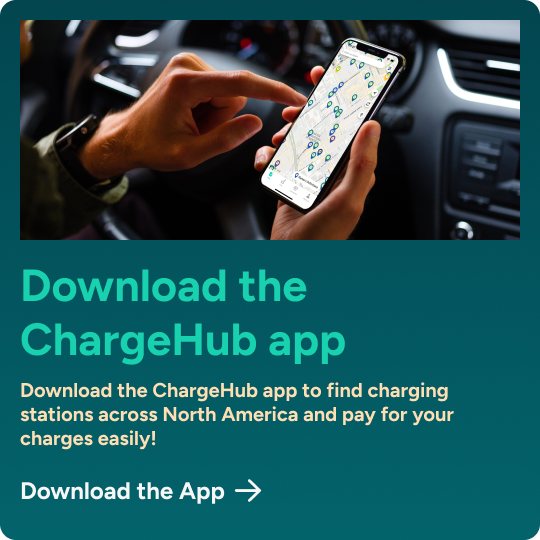
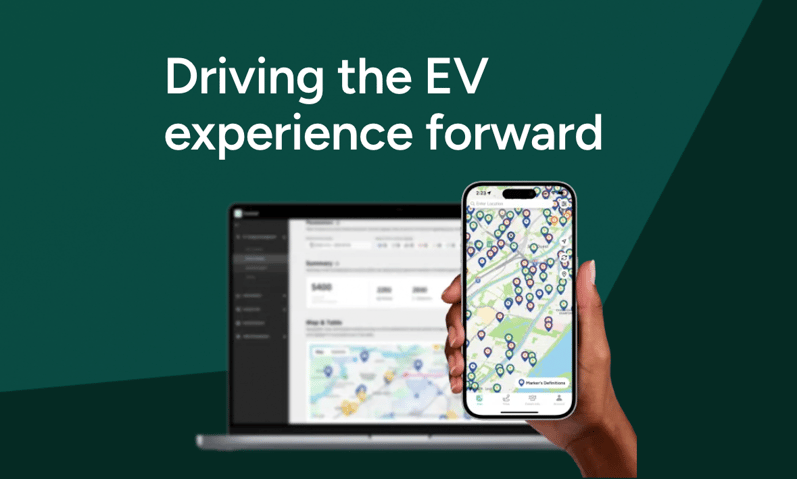
The ChargeHub app displays a map of charging stations for electric vehicles.

Choosing "the best network" in North America means asking the wrong question. The real question is: how do you access the best available network at any given moment, regardless of the operator?

That's precisely the problem ChargeHub solves. ChargeHub is not just another charging network. It's the solution that connects all networks under a single interface for both drivers and businesses.

For EV drivers, the ChargeHub app centralizes more than 300,000 charging ports across North America (Tesla, ChargePoint, FLO, The Electric Circuit, Electrify America, Blink, and many more) within a single interface. The interactive map shows real-time availability, and payment is compatible with more than 160,000 ports, allowing drivers to activate and pay for many public chargers directly in the app without creating a separate account with each operator. The app is free, as is browsing the map; only activated charging sessions are billed.

For businesses, ChargeHub's Passport Hub solution allows charging station operators (CPOs) and electric mobility service providers (eMSPs) to interconnect through a unified framework. Beyond the technical aspect, the solution also simplifies the commercial, legal, and financial dimensions of roaming, making it easier to connect partners at scale.

Stop wasting time comparing networks one by one. Find the best available charger near you instantly, regardless of the operator.

Browse our interactive map! More than 300,000 ports are listed across Canada and the United States and are updated in real time.


FAQ: How to optimize your charging sessions in North America

Is the ChargeHub app free?

Yes. Downloading the app and browsing the charging map are completely free. When a charging session is activated through ChargeHub, the operator's charging fees apply, along with a possible per-transaction service fee. For frequent users, a monthly or annual subscription allows unlimited transactions per session, with no additional fees.

How do I identify chargers that can be paid through ChargeHub?

On the interactive map, chargers compatible with ChargeHub payment are identified by an orange lightning bolt. A dedicated filter also lets you display only those chargers on the map.

What is the state of charging infrastructure across all networks in North America?

In the United States, more than 172,000 Level 2 AC ports and nearly 68,000 DC fast ports are publicly available, according to the AFDC. In Canada, the federal government's reference scenario projects approximately 679,000 public charging ports by 2040, requiring an average of 40,000 ports to be installed per year. EV charging infrastructure is expanding rapidly but unevenly across regions, which makes an access solution like ChargeHub all the more relevant.

Why doesn't a 350 kW charger always charge at 350 kW?

Charging speed is always determined by the weakest link between the charger and the vehicle. If your battery can only accept 100 kW as the maximum input, plugging in a 350 kW cable will not increase the actual charging speed. Outdoor temperature, the battery's initial state of charge, and its overall condition also affect the power actually delivered.

Is ChargeHub available for business fleets?

Yes. ChargeHub works with automakers (OEMs), fleet managers, governments, municipalities, and network operators (CPOs and eMSPs). Its Passport Hub solution is specifically designed to simplify interoperability at an industrial scale, across North America and beyond.