Published on January 27, 2026 (Updated on January 27, 2026)

You just bought your first electric car, and you're wondering: Should I charge to 100% every night? It's a question many new drivers ask, and the answer might surprise you.

For most EV owners, systematically charging their vehicle to 100% is not recommended. Manufacturers, including Tesla and Ford, generally recommend maintaining the battery state of charge between 20% and 80% for daily use to preserve battery life and warranty coverage. Charging to 100% is a strategy to reserve for long trips and should be done just before departure. A notable exception concerns LFP-type batteries (typicaly on entry-level models), which some manufacturers encourage charging regularly to 100% for battery calibration purposes.

Here's everything you need to know to optimize battery life.


From Quebec to the United States, a Reliable Charging Network

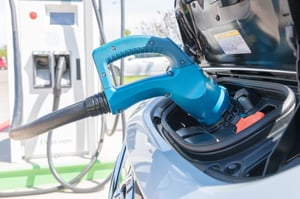
All major manufacturers agree on one point: the daily routine should never involve charging to 100%.
02-recharger-son-ve-100

  • Tesla : explicitly recommends 80% for standard batteries
  • Ford (Mach-E, F-150 Lightning): suggests 90% maximum for daily use 
  • GM (Bolt) : recommends 80% to preserve long-term capacity

These recommendations aren't arbitrary. Keeping your battery at full capacity accelerates its chemical degradation, especially during extreme heat.

Checking Compatibility

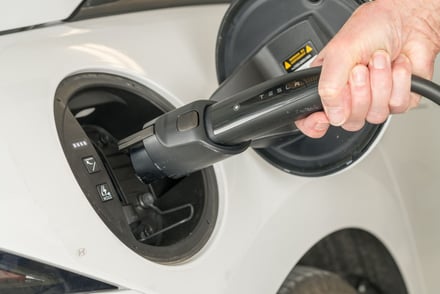
Not all charging stations use the same connector: the most common are CCS, CHAdeMO, and NACS. Make sure yours matches the station's. If your cable isn't compatible, some stations have an integrated charging cord.

The Impact on Your Warranty

Here's an important detail: your warranty may be affected if battery degradation is deemed excessive. Generally, warranties cover capacity loss of up to 30% over 8 years or 160,000 km, but poor practices (such as consistently charging your electric car to 100%) could complicate a claim.

ChargeHub tip: configure your Level 2 station to automatically cap at 80%. Some of our smart home stations let you set this limit and schedule charging during Hydro-Québec's off-peak hours.

Charging to 100% for Long Trips: When it's Necessary

Now let's talk about the exception to the rule. When you're preparing for a trip, charging to 100% becomes not only acceptable but also recommended.

The Right Strategy for Long Distances

Here's how to proceed intelligently:

  1. Ideal timing: program the end of charging so it finishes 1 to 2 hours before your departure. You want a battery at 100%, but not one that stays at full charge for 8 hours.
  2. Leave quickly: as soon as your vehicle reaches 100%, hit the road. Every hour spent at full charge, without driving, adds unnecessary stress to the cells.
  3. Plan your stops: use the ChargeHub app to identify fast stations on your route. The goal is to never drop below 10% between stops.

The fear of running out of range is real, especially during long winter trips. Charging to 100% before a trip isn't a whim; it's a practical necessity. The key is understanding that 100% is a tactical tool, not a daily habit.

LFP and NMC Batteries: Why Two Different Rules

Winter puts battery chemistry to the test. Here's what you need to know about charging in cold weather.

How do you know what you have? Consult your vehicle's specifications or the manufacturer's app. Tesla, for example, clearly indicates the battery type in the settings.

Recalibration: When 100% is Necessary

Even if you have a standard battery, there's one situation where charging to 100% becomes useful: recalibrating the system that estimates your range. Over time, this system can lose accuracy. Completing a full cycle (ramping up to 100%, then down to below 10%) allows your vehicle's computer to determine the battery's real limits. This doesn't improve the internal chemistry but ensures the displayed range is reliable.

Fast Charging Your Electric Car: Why Stop at 80%

Here's one of the secrets of fast charging: the last 20 percent takes disproportionately long.

The Slowdown After 80%

When you use a fast charger, you'll notice that the charging speed drops sharply above 80%. This is normal and intended to protect the battery.

Exemple concret avec une Ford Mach-E :

  • 0% to 80%: about 35 minutes = fast and efficient 
  • 80% to 100%: 25-30 additional minutes = slow and frustrating

The winning strategy: during a trip, plan several short stops (20-80%) rather than a single stop (100%). You'll save time.

Charging Networks in North America

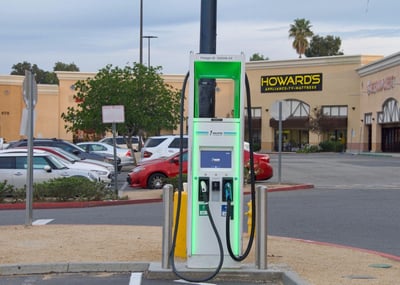
To plan your travels with confidence, it's essential to know the main charging networks available in North America.

undefined-Jan-19-2026-06-59-10-0413-PM

Circuit électrique : the dominant network in Quebec, recognized for the reliability of its stations and its strong presence throughout the province. Start a charging session with the ChargeHub app.

Tesla Supercharger : the fastest and most dense network in North America. Primarily used by Tesla owners, but increasingly accessible to other vehicles thanks to new connector standards.

FLO: a major Canadian network operating in Quebec, Ontario, Western Canada, and several U.S. states. Often installed in municipal parking lots, businesses, and shopping centres. Start a charging session with the ChargeHub app.

Electrify America / Electrify Canada : a fast charging network covering the majority of American states and several Canadian provinces, ideal for long trips.


ChargePoint : one of the largest networks on the continent, offering Level 2 stations and fast stations in thousands of public locations. Start a charging session with the ChargeHub app.

Practical Tips for Winter

Winter is demanding on batteries. Here's what you need to know about charging to 100% in cold weather.

Adapting Your Habits in Winter

Preheat your battery before fast charging in extreme cold (-15°C or lower): drive for 10 to 15 minutes. A cold battery accepts a charge much more slowly.

100% in winter is more acceptable: in very cold weather, you lose 20-40% of range. Going up to 90% for daily use in January in Montreal or Quebec City isn't unreasonable.

Keep your vehicle plugged in: even if you're not charging to 100%, leaving your EV connected to the station helps the system maintain the battery at an optimal temperature.

Use a smart station: ChargeHub stations communicate with your vehicle to optimize charging based on temperature.

Your Ideal Routine

undefined-Jan-19-2026-07-06-22-8433-PM

  1. At home: charge overnight, limit to 80%, and take advantage of Hydro-Québec's reduced rates
  2. For errands: charge as needed, no stress about the exact percentage
  3. On the road: 20-80% strategy at fast station stops
  4. Trips: 100% on the morning of departure, then 20-80% at intermediate stops

Smart Charging Starts at Home

Charging to 100% is neither a crime nor an obligation. It's a tool you should use strategically based on your current needs.

To summarize:

  • Daily use: 20-80% is your comfort zone.
  • Long trips: 100% on the morning of departure
  • LFP batteries: 100% regularly is acceptable.
  • Fast charging: stop at 80% to save time.
  • Winter: be more flexible with your limits.

At ChargeHub, the best way to protect your investment is to adopt good practices from the start. A smart Level 2 station that automatically manages your charge limit, off-peak hours, and battery temperature provides peace of mind every day.

Adopt good practices: some of our smart Level 2 home stations automatically set your charge limit to 80%. Simplify your daily routine and protect your electric vehicle.