Published on November 18, 2025 (Updated on November 18, 2025)

Canadian winters and the cold climates of northern U.S. states put electric car drivers to the test. Freezing temperatures, snowy roads, and long trips all demand good planning. You’ve probably noticed that your electric vehicle EV’s range decreases as soon as the temperature falls. Don’t worry; there are several simple ways to maintain your range and comfort high, even in the cold.


Why Cold Weather Affects EV Range

When the temperature drops, your EV battery's efficiency decreases. Cold slows down the chemical reactions that create energy, reducing the battery’s ability to deliver full power. The result is a loss of about 20-40% of the range, depending on your model and the weather.

Heating the cabin, using seat warmers, defrosting windows, and maintaining battery temperature also consume significant energy. On frigid days, the car uses battery power just to keep the interior comfortable and the battery warm.

Tests in both the United States and Canada show that all EVs experience some drop in performance in cold weather, whether you drive a Tesla, Ford, Hyundai Ioniq 5, or Chevrolet Bolt.

How to Get the Most Out of Your EV in Winter

A few simple habits can make a significant difference. Here are some practical tips to help you preserve your range and drive comfortably all winter.

Preheat your vehicle before you drive

Before hitting the road, keep your car plugged in while it warms up. This lets you use grid energy instead of your battery. Preheating also improves battery performance once you’re on the road.

By starting with a warm battery, you’ll get more power right away and preserve range from the first mile. Remember, keeping your battery warm is essential in winter.

Use heat efficiently

Seat heaters and heated steering wheels use much less energy than the whole cabin heater. Activate them first to stay comfortable while saving energy.

If your car has a heat pump, turn it on; it’s far more efficient than a traditional resistance-heating system.

Drive smoothly

Sudden acceleration consumes energy quickly, reducing range. Instead, drive smoothly and steadily; it’s the best way to maximize range on icy or snowy roads.

Regenerative braking also helps recover energy during city driving, especially in stop-and-go conditions.

Check tire pressure and type

Cold weather naturally lowers tire pressure, which increases rolling resistance. Properly-inflated winter tires reduce that resistance and improve handling.

Regular tire maintenance keeps you safe and helps your battery last longer throughout the winter season.

Charging Your EV in Winter: What to Know

Cold weather doesn’t just reduce range; it also slows down charging. When the battery is very cold, it takes longer to reach the ideal charging temperature.

Charge right after driving

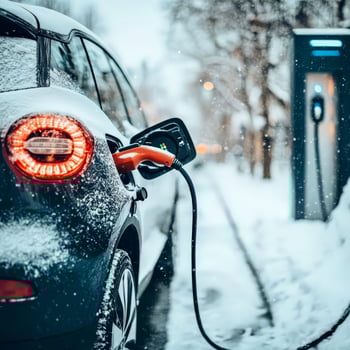
Plug in as soon as you arrive at your destination, while the battery is still warm. This reduces charging time because the battery chemistry is already active.

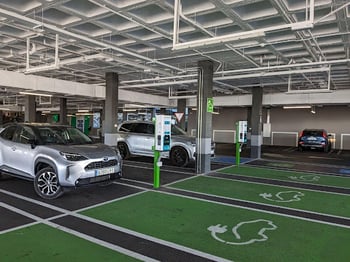
Covered parking for electric vehicles with charging stations

Choose fast chargers and sheltered locations

Fast chargers are ideal for long trips. They can restore up to 80% of range in about 30 to 40 minutes, depending on power output and temperature.

Whenever possible, park in a garage or covered lot. Batteries hold their charge better when protected from wind and freezing temperatures.

Plan your stops with ChargeHub

If you want to travel stress-free this winter, plan your charging stops in advance. The ChargeHub app lets you find real-time available charging stations compatible with your vehicle, even in extreme cold. You can filter by station type, power level, or location to prepare your trip confidently.


Real-World Range Differences Between EV Models

undefined-3

Not all electric vehicles perform the same in cold weather. Some models have advanced thermal management systems that preheat the battery before driving.

Cars with heat pumps also retain more range in low temperatures. Newer models automatically regulate internal battery temperature to maintain optimal performance in winter.

Manufacturers generally recommend keeping your battery between 20% and 80% charge to preserve long-term health. Always check your vehicle’s manual for model-specific advice.

Drive Confidently This Winter

Electric cars have made considerable strides in handling cold weather. With improved batteries, thermal management systems, and fast chargers, winter driving is now much more enjoyable.

Winter no longer needs to hold you back from driving an electric vehicle. By understanding how cold affects your EV and following a few smart habits, you can maintain great winter range whether you’re in Québec, Ontario, or Colorado.

Download the ChargeHub app to plan your charges and enjoy a smoother, more efficient winter drive with more comfort and confidence every mile.


Electric Car Range in Winter

How much range do electric cars lose in winter?

Most EVs lose between 20% and 40% of their range depending on temperature, model, and driving habits. For example, a car that offers 250 miles of range in summer may drop to around 175 miles at –4°F (–20°C). Preconditioning the battery and using seat heaters instead of cabin heat helps limit this loss.

How can I improve battery range in extreme cold?

Preheat your EV while it’s plugged in, use heated seats, and charge right after driving when the battery is still warm. These simple steps help maintain a stable range and comfort even in freezing conditions.

Do fast chargers work well in winter?

Yes, though charging speed can slow down when the battery is very cold. Fast chargers remain the best option for quickly recovering range. For quicker results, plug in after driving instead of starting a charge with a cold battery.

Should I worry about winter range in Canada or cold U.S. states?

Not at all. Modern electric vehicles are built to handle North American winters. With thoughtful planning, regular charging, and smooth driving, you can travel confidently all season long.