Published on April 29, 2026 (Updated on April 29, 2026)

You arrive at a charging station and notice the cable has been cut and stolen. These situations remain uncommon, but they can happen. Cable theft at public charging stations mainly affects public infrastructure. It directly impacts your ability to charge your electric vehicle while on the road.

Why does this happen? What are the real impacts for EV drivers? And most importantly, how can you keep charging without disrupting your trips? Here is what you need to know.


Why public charging stations are more exposed

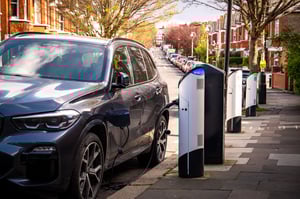
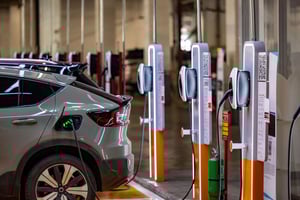
Electric vehicle being charged at a row of public charging stations in a parking lot

Public EV charging stations are accessible at all times. Locations such as commercial parking lots, downtown areas, and highway rest stops offer limited physical control. Unlike a home charger, a public station remains visible and accessible 24 hours a day. The main target is the cable attached to the station. Thieves are typically after the copper inside the connectors, hoping to resell it. Copper resale value remains the primary motivation. Even though copper is not easy to access, some individuals attempt to cut the charging cable, disrupt the electrical circuit, and leave quickly.
What this means for you on the road

When a charging cable is cut and stolen, the station becomes immediately unusable. This reduces charger availability in the area and can temporarily impact public charging supply. If you planned a 30-minute fast charging stop, the situation can quickly complicate your trip. You may need to find another station and adjust your route.

In some urban areas, cable theft has slightly increased in recent years. However, the vast majority of public charging stations remain fully operational and accessible every day. It is important to keep perspective. The issue exists, but it does not undermine the overall reliability of the public charging network across North America.

Why copper still attracts thieves

Copper has a significant resale value, which encourages some individuals to attempt quick resale at scrap yards, even though the actual return is often lower than expected. At first glance, charging cables may seem lucrative. In reality, they contain protected technical components, and extracting copper cleanly without proper equipment is extremely difficult.

For network operators, the situation is costly. Replacing a cable requires inspecting the electrical circuit, securing the station, and completing repairs. These incidents generate significant expenses for public networks and indirectly affect EV drivers who rely on public charging infrastructure.

How operators are responding to cable theft

Electric vehicle being charged at a row of public charging stations in a parking lot

In response to cable theft at EV charging stations, several North American operators are gradually adapting their equipment to reduce risks and minimize service interruptions.

Some manufacturers are redesigning cables to make them more resilient to cutting. Others are integrating systems that detect cable cuts and send real-time alerts. ChargePoint’s initiative to combat cable theft at public stations illustrates this technology-driven approach focused on rapid detection and service continuity.

In certain cities across Canada and the United States, networks are also collaborating with local authorities to better track cable theft trends and target preventive actions. The objective remains clear: maintain public charger availability and preserve driver confidence.

How to avoid unpleasant surprises during your trips

While you cannot control vandals' behaviour, you can certainly stay one step ahead. Before heading to a public charging station, check its real-time status and browse recent user reviews. If a station has been vandalized or reported offline, you will know instantly, allowing you to re-route to a nearby alternative without losing time. This simple habit significantly reduces uncertainty and ensures you can power up with peace of mind.

The essential role of the ChargeHub app

At ChargeHub, we understand that public charging reliability is essential for both daily commutes and long-distance travel.

Our app helps you plan every charging session by providing clear visibility into charger status.

If you encounter vandalism at a station, you can report it directly in the app. This improves transparency for the entire community.

In seconds, you can inform other drivers that a cable has been cut and help maintain better charger availability. The more EV drivers share information, the more reliable the network becomes. Public charging depends on collective awareness.

Is the issue really alarming in North America?

Some cities in Canada and the United States have seen temporary increases in copper-related theft. These incidents remain localized and mostly affect specific urban areas. The vast majority of public chargers operate normally every day, and thousands of charging sessions occur without incident.

North American charging networks continue to expand rapidly, with ongoing investments in fast-charging infrastructure and enhanced security measures. Manufacturers are adapting cable designs and strengthening equipment protection to better prevent malicious acts.

Continue charging with confidence

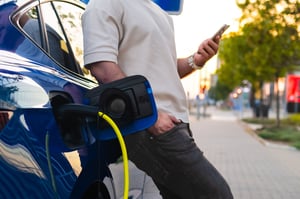
A driver using their phone while their electric car is charging at a public charging stationCable theft at public charging stations is a real challenge, largely driven by the resale of copper. However, charging networks are continually strengthening security, and technology is evolving to make copper extraction more difficult.

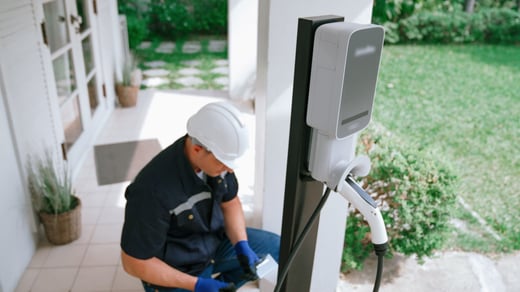
On your end, you can plan your stops, verify charger status before departure, and report any issues with just a few taps.

The transition to electric vehicles continues to grow across North America, and public charging stations play a central role in this evolution. By staying informed and planning with ChargeHub, you can continue charging with confidence while helping ensure the public network's reliability.