
-
EV Business Solutions
-
EV Drivers
-
Our Company
-
Resources
Frictionless Charging Starts Here
Enable seamless charging with less complexity. Powered by our EV roaming hub, ChargeHub’s Plug and Charge solution connects to your existing systems and preferred PKI provider, offering the most scalable path forward with just one integration.
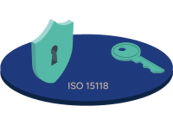
Plug and Charge is a standard defined by ISO 15118 that enables automatic EV authentication and charging initiation: no apps, cards, or screens required. Once enabled, drivers simply plug in, and charging begins.
Future-proof your operations with scalable infrastructure
End-to-End Testing:
Validate your implementation in our dedicated lab
Certificate Management:
Let us handle digital certificate exchange and authentication workflows
Roaming-Based Activation:
Our roaming hub is the cornerstone to enable Plug and Charge without peer-to-peer integrations
Streamlined Session Reconciliation:
Aggregate charging sessions and certificate-related transactions for simplified billing and reconciliation
PKI Flexibility:
Work with your preferred trusted certificate authority for maximum security
Hubject is a pioneer of Plug and Charge technology and operates one of the most mature ecosystems supporting ISO 15118. Their extensive experience and global reach make them a trusted provider for secure certificate handling and interoperability at scale.
Irdeto brings over 50 years of cybersecurity innovation to the EV space. Their PKI services are built for reliability, offering high-assurance certificate management that ensures every Plug and Charge session is secure, trusted, and future-ready.
Our Plug and Charge solution is designed for flexibility. That’s why we support all providers that meet industry standards.
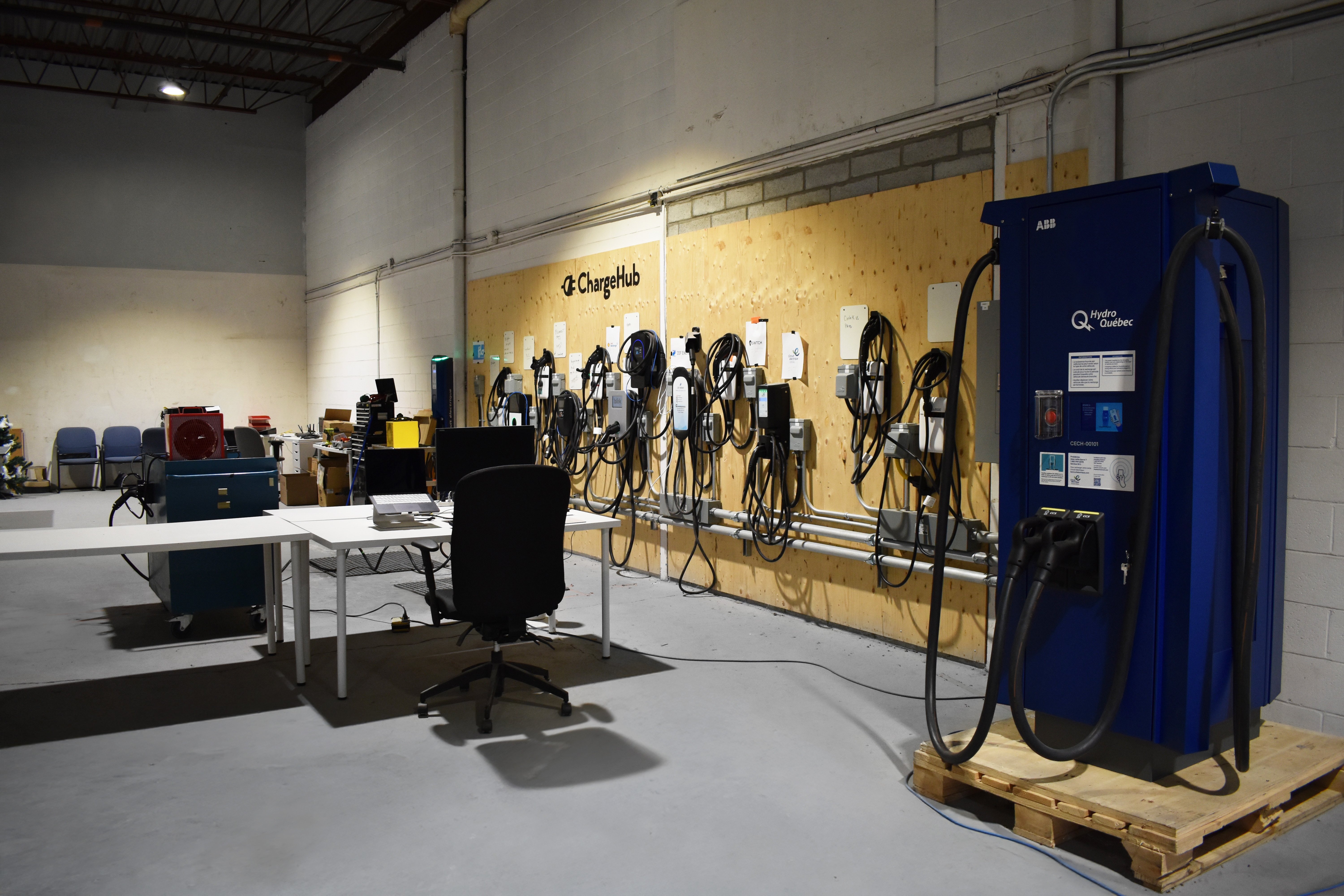
Our lab features a full Plug & Charge testing environment with multiple AC and DC EVSEs. OCPP-compatible stations connect directly to your backend, and our EV simulator replicates real-world scenarios to validate certificate flows and test contract handling. Everything is tested before you go live for a smoother deployment.
Whether you’re a CPO or an eMSP, ChargeHub’s team and platform are with you every step of the way. From setup to post-session settlement, we help you roll out Plug and Charge with confidence, supporting the full session lifecycle, what we call the RAAR process.
The single initial configuration that activates Plug & Charge using a digital identity and contract.
The protected exchange that connects the vehicle and charger securely.
The confirmation that the charging session is authorized according to the driver’s contract.
The concluding phase where all session transactions are recorded and reconciled.
Plug and Charge relies on secure communication between all parties. To get started, make sure your systems, vehicles or stations meet these technical requirements:
Once the requirements are met, the next step is to sign a sublicensing agreement. Our solution integrates seamlessly with your chosen PKI, with straightforward billing included on your regular invoice.
Plug&Charge technology is compatible with a wide range of charging stations that adhere to the ISO 15118 standard. This standard ensures that vehicles and charging infrastructure can communicate effectively, enabling a secure and efficient charging experience.
While both solutions aim to simplify the EV charging process, Plug&Charge technology (based on the ISO 15118 standard) incorporates a much more secure and robust communication process. ISO 15118 uses digital certificates to authenticate the vehicle, allowing encrypted communication between the vehicle and the charging station. This standard also uses a digital certificate to represent the EV driver for authorization, ensuring secure, automatic transactions without requiring user input. In contrast, Autocharge does not authenticate or encrypt communication; it only uses the vehicle’s MAC address to identify and authorize the user, which provides a more basic level of access control.
The ISO 15118 standard that governs Plug&Charge is built on the highest security requirements. It relies on digital certificates which are responsible for the identification of ecosystem participants and the encrypted communication between them. For example, each charge point and charging contract are represented by a unique certificate. For the system to work, certificates need to be present in vehicles, charge points and backend systems. A trusted third party entity (Certificate Authority) must be part of the whole chain for enabling the seamless and secure operation of Plug & Charge, providing trust between the vehicle, the charging station, and the backend systems.
Public Key Infrastructure (PKI) is a crucial element of Plug&Charge technology. It provides the framework for secure communication between electric vehicles and charging stations. PKI uses digital certificates to authenticate and authorize users, ensuring that each transaction is safe from cyber threats. This infrastructure underpins the security and reliability of the Plug&Charge experience.
To explore the integration of Plug&Charge technology into your operations, contact us for a personalized consultation. Our team will guide you through the process, ensuring a smooth implementation tailored to your specific needs.